Christmas campaigns have to work hard. They need to be visible, easy to understand, useful for content and strong enough for PR.
That’s why a branded tree in a train station can be more than a decoration. In the right location, it can become the physical centrepiece of a wider festive campaign.
The strongest campaign examples are not just trees with logos attached. They create real-world campaign moments built around visibility, sampling, gifting, content and public engagement.
Some of the examples below are station activations, while others come from wider destination and retail environments. The lesson is the same: the most effective festive campaigns give people a clear reason to stop, engage and remember the brand.
The Brand World Tree
This is the most direct way to use Festive Space: turn the tree into a physical expression of the brand.
That could mean custom decorations, product-inspired baubles, brand colours, surrounding décor, or a wider space that feels clearly connected to the Christmas campaign.
Kate Spade New York showed how a station tree can sit within a bigger brand world. Their holiday tree at London Waterloo was supported by wider campaign activity, including branded taxis and digital advertising.
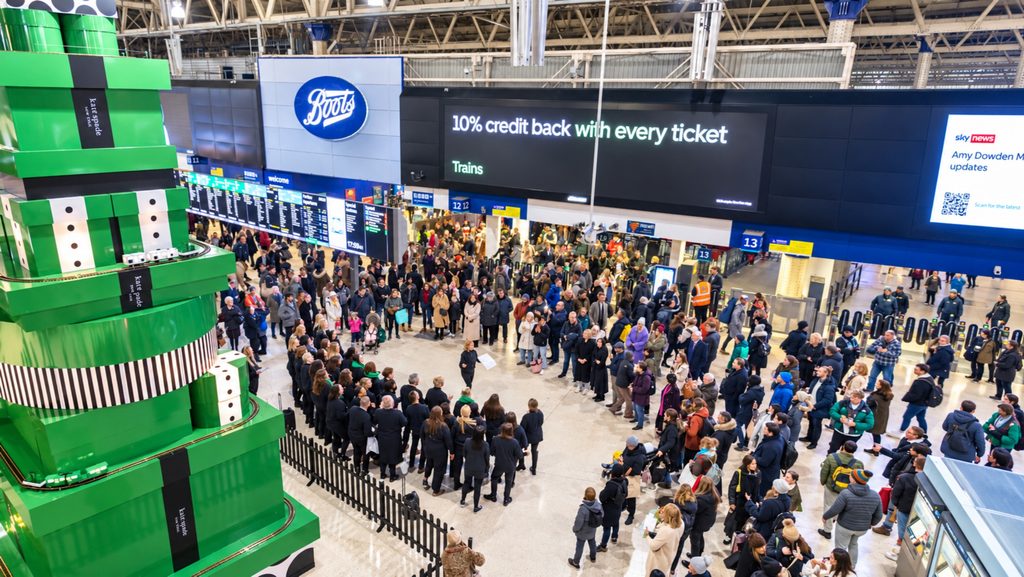
Choosing the right location was crucial for the activation, with London being top of the list due to the city being “a hub of creativity for the brand”, according to Liz Fraser, CEO of Kate Spade New York. London Waterloo was then selected as the preferred venue, where the festive footfall reached over 7.4 million during the activation.
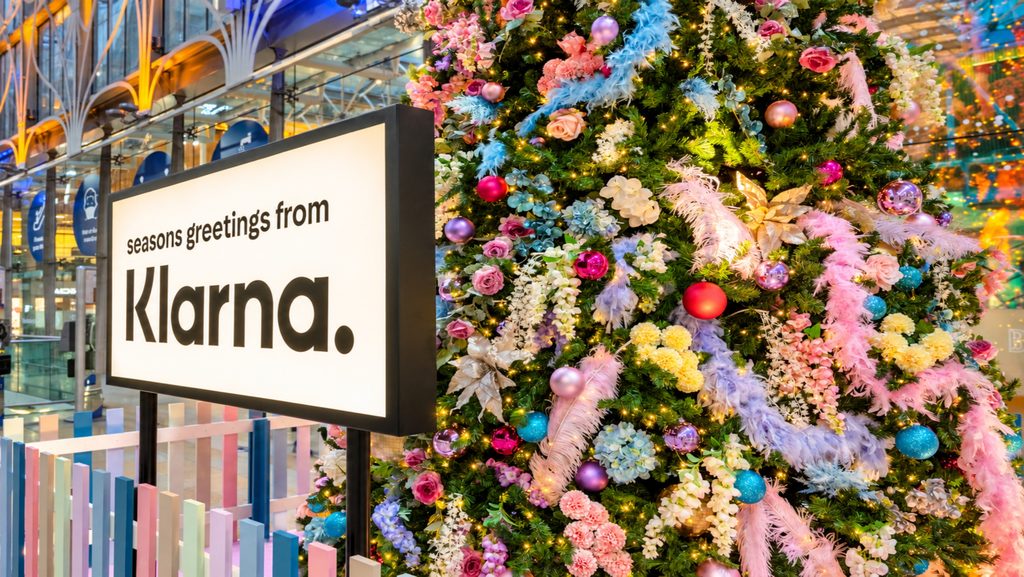
Klarna’s Christmas tree at London Paddington was another great example. The brand created a six-metre tree with colour-matched decorations, feather boas and custom disco ball baubles. The tree was surrounded by a Klarna-inspired picket fence, with Christmas carols played throughout the activation, which was seen by more than 3.8 million people at the station.
Oura’s 2025 activity at Battersea Power Station showed how a compact product can be translated into a large-scale festive brand presence. The activation featured a seven-metre Christmas tree alongside a large ring installation, bringing the product’s distinctive design into a physical environment. Timed around Black Friday and the gifting period, it showed how a strong spatial idea can help a brand create visibility, relevance and product awareness when people are already in a shopping mindset.
For brands with strong visual codes, this is the obvious starting point. A station tree gives them a high-visibility festive focal point that can connect the physical environment with wider media, retail, social and PR activity.
The Sampling and Gifting Tree
Christmas is a natural moment for product discovery. People are travelling, meeting friends, visiting family and shopping for gifts. That makes a station environment a useful place to put products into people’s hands.
A tree can act as the anchor for sampling, gifting or trialling a product. The campaign does not have to stop at visibility either, as it can give people a reason to pause, interact and take something away.
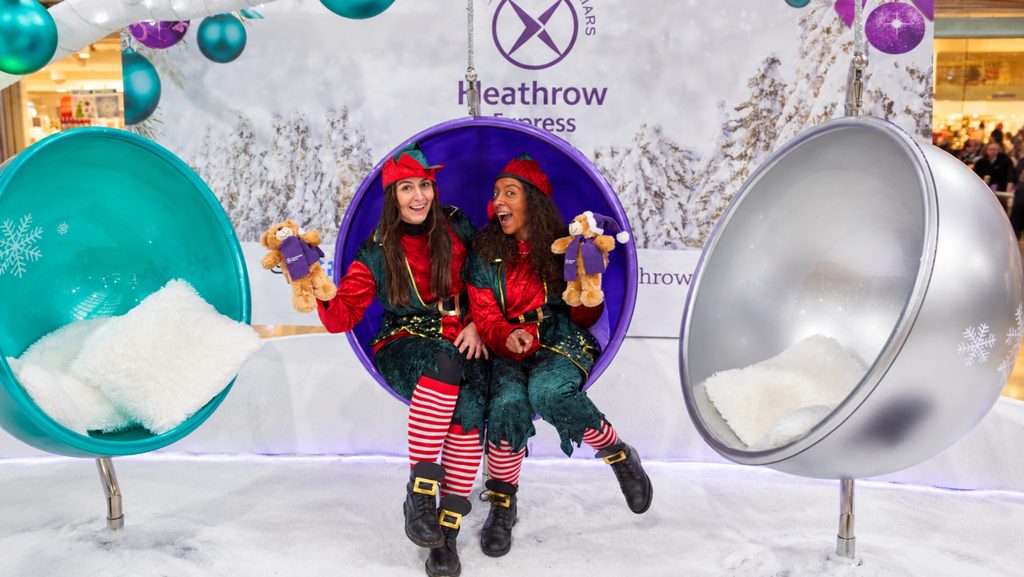
The Heathrow Express festive campaign at London Paddington is a strong example. The brand brought festive cheer with a Christmas tree and giant bauble seating designed for photos. Brand ambassador elves were also positioned near the Heathrow Express platforms, giving travellers teddy bears and postcards to send from their destinations.
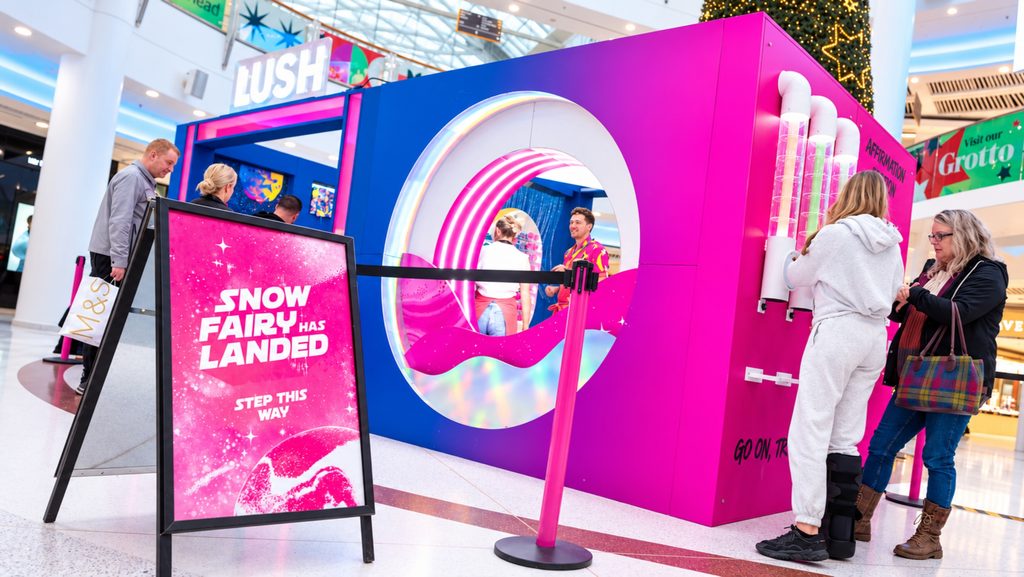
Other festive activations showed the same principle in different ways. Ritter Sport invited passers-by at Manchester Piccadilly to tell Mrs Claus about their loved ones and pick up chocolate samples. LUSH used its Snow Fairy pop-up to give shoppers the chance to sample and purchase limited-edition products across several shopping centre locations.
For food, drink, beauty, gifting and retail brands, this is one of the clearest uses of a Festive Space. The tree creates the destination, and sampling or gifting creates the interaction.
The Shareable Tree
Some festive campaigns are built for reach beyond the station. The installation still needs to work in the physical space, but it should also give people something worth photographing, filming or sharing.
That could be a photo moment, competition, QR-led offer or an interactive element that makes the campaign more than just a static presence.
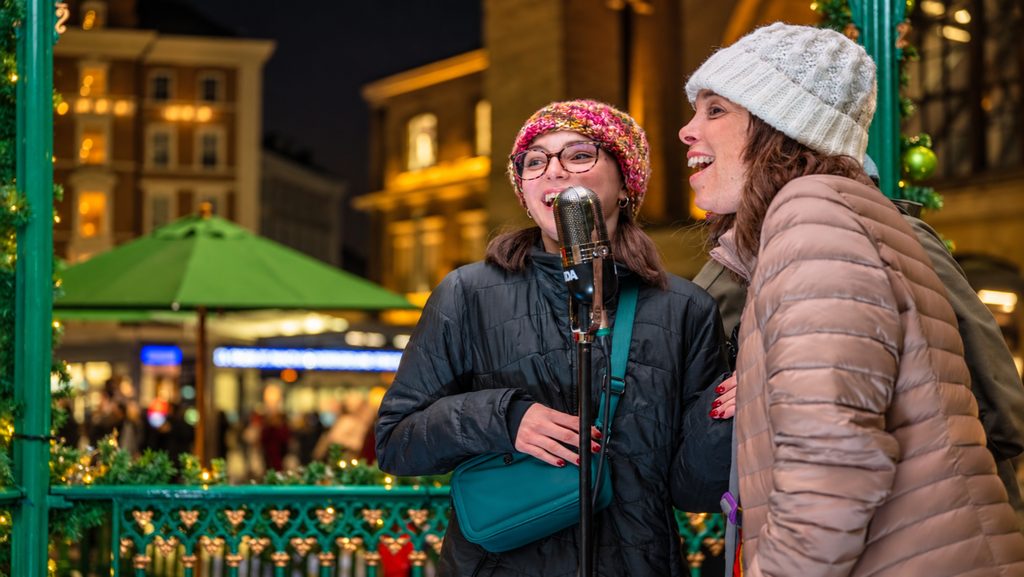
ASDA’s King’s Cross activation was a good example of a simple interactive hook. Created with Electric Sunshine to support the launch of its Christmas ad, the activation included a Christmas tree that only lit up when passers-by sang Michael Bublé festive hits into it.
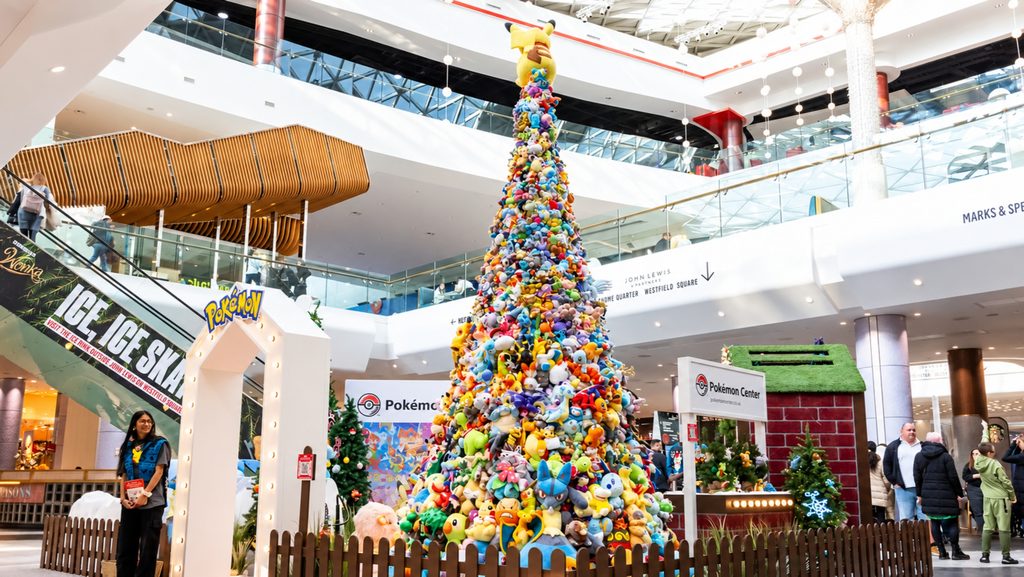
Pokémon’s Holiday Plush Display at Westfield London was another strong example of a festive installation built for image/social sharing, product discovery and data capture. The activation featured a five-metre tree made from more than 800 Pokémon Center plush toys, with QR codes that allowed visitors to browse products on the Pokémon Center UK online store and enter a Pikachu Plush competition. Sense Marketing’s case study described the installation as a “Plushmas Tree”, reported 16,000 visitors and a 25% conversion rate on Pokémon’s ecommerce site.
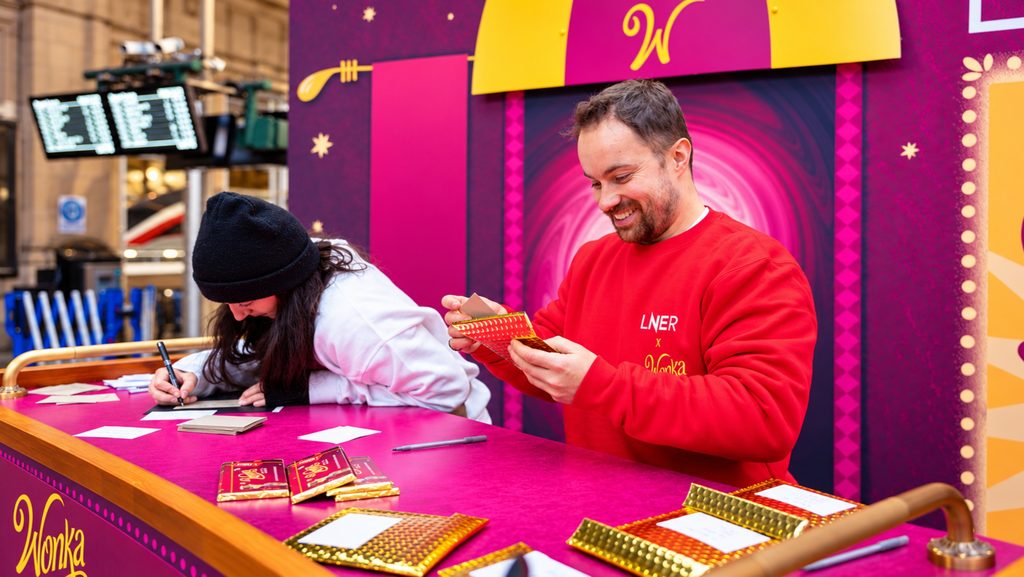
LNER’s Wonka activity showed how a station activation can invite participation. Passers-by at King’s Cross and Edinburgh Waverley were invited to send a chocolate bar and message to a loved one, add a message to a screen built into the installation, or claim their own Wonka bar by sharing messages on social media with the campaign hashtag.
This kind of idea is especially relevant for agencies planning PR, creator or social-first Christmas campaigns. The station gives the campaign scale and context, while the interaction gives people a reason to engage.
The Giving Tree
Christmas campaigns do not always have to lead with a product. For charities, purpose-led brands or businesses with a CSR message, a festive space can become a focal point for giving, awareness or positive public action.
The mechanic can be simple: a donation trigger, pledge wall, message tree, golden tag, or gifting drop-off. What matters is that the activity is easy to understand and easy for people to take part in.
Virgin Media’s Christmas activation at London King’s Cross showed the potential of this type of activation. The brand donated £1 to Carers UK for every spin on its festive spinner, raising £3,000 for the charity while also giving prizes to commuters.
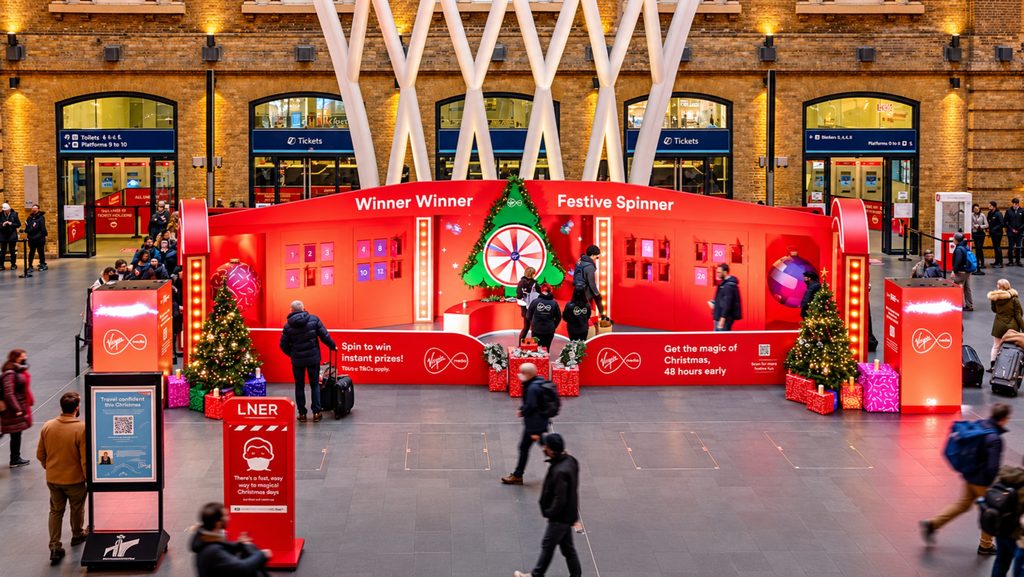
A station environment is useful for this kind of campaign because it brings together large public audiences during a period when charitable giving, community and goodwill are already culturally relevant. A giving-led Festive Space campaign could support fundraising, PR and public engagement without needing to feel overly complicated.
The Launch Tree
Christmas is also a major launch window. Retail products, entertainment releases, seasonal ranges and travel campaigns all compete for attention.
A station tree can give a launch campaign a real-world focal point. It can turn a release, advert, product or partnership into something that people can see and interact with.
Wicked: For Good – The Experience was a fairly recent example of entertainment marketing being turned into a physical festive destination. The activation ran at Westfield London from mid-November 2025 until early January 2026 to coincide with the Universal Pictures film release. The activation was built around a choose-your-own-adventure walkthrough, a 12-metre Wicked: For Good tree and a digital Yellow Brick Road trail through the Westfield app. It was also supported by a wider retail media strategy using large-format screens, experiential installations, DOOH, app integration and email communications.

Stranger Things showed how an entertainment launch can be extended into festive station spaces. To support the final season, Netflix unveiled Stranger Things-themed Christmas trees at London Waterloo and Manchester Piccadilly, using Hawkins-themed baubles and ornaments to bring the world of the show into high-footfall transport environments.
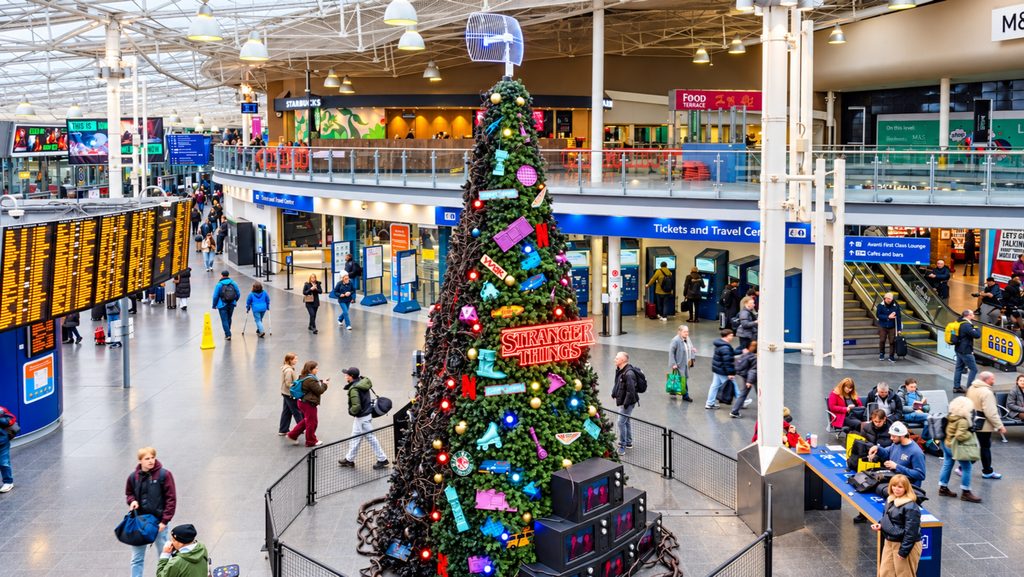
The trees formed part of a wider fan campaign that also included WSQK ‘The Squawk’, a Hawkins-inspired radio station, a branded van touring Manchester, Liverpool and Brighton, and immersive fan activity. The campaign was a useful example of how a festive tree can become one touchpoint in a much broader entertainment launch campaign.
For entertainment, streaming, gaming, travel and retail brands, this is where Festive Space can work hardest. The tree is not just festive dressing. It becomes a launch platform, content set, PR hook and public engagement point.
The Tree Is the Starting Point
The strongest festive activations usually have one thing in common: the physical installation is only the beginning.
A branded tree can create visibility, but the real campaign value comes from what is built around it. That could include:
- sampling
- gifting
- PR
- charity mechanics
- retail offers
- live performances
- social competitions
- wider brand takeovers
Previous festive activations have shown how brands can use station environments to create high-visibility Christmas moments. Festive Space 2026 gives brands and agencies the opportunity to shape that same type of thinking around selected major UK rail stations. Campaign options can be tailored around the brand, audience and creative ambition, from elegant tree-base branding to more developed branded festive spaces and hero campaign installations.
For brands planning Christmas 2026, the question is not simply whether to sponsor a tree. It is what campaign idea the tree can help bring to life.
Interested in seeing how the opportunity is shaping up for 2026? Request the Festive Space pack to see available stations, campaign options and pricing.